news
Sustainable Design Consultant Guide to Global Risks 2026

A sustainable design consultant advising clients in 2026 can start with one document: the World Economic Forum’s Global Risks Report 2026, published on 14 January. It ranks geoeconomic confrontation as the risk most likely to cause a material global crisis this year, ahead of interstate conflict, extreme weather, societal polarisation and misinformation.
These are not design topics in the narrow sense, but each changes what a good design brief looks like. Supply chains, climate extremes and public trust all shape the materials, resilience and communication that a project needs.
Key takeaways
- The Global Risks Report 2026, released on 14 January, ranks geoeconomic confrontation first for the coming year, up from eighth a year earlier.
- Interstate conflict, extreme weather, societal polarisation and misinformation and disinformation follow in the top five.
- Extreme weather ranks first over the ten-year horizon, and economic downturn and inflation each rise eight places over the next two years.
- A sustainable design consultant can turn each risk into a design requirement: local and repairable supply, resilience, clear evidence and sensible cost.
What does the Global Risks Report 2026 say?
The report, based on a survey of experts, describes a shift to an “age of competition” in which confrontation has replaced cooperation and trust. Geoeconomic confrontation, meaning the use of trade restrictions, sanctions, investment controls and technology bans for strategic ends, jumped from eighth to first place. Half of respondents expect a turbulent or stormy outlook over the next two years.
Environmental risks remain prominent. Extreme weather ranks fourth for the short term and first over ten years. Economic risks show the largest increases: economic downturn and inflation each rise eight positions over the two-year horizon. The picture is of a world in which prices, supply and the climate are all less predictable.
What does a sustainable design consultant do with a risk report?
A sustainable design consultant helps clients make design decisions that reduce environmental impact and withstand uncertainty. The risk report supplies the scenarios. For each major risk, the consultant asks what it would do to a project and what design choice would reduce the exposure.
The output is a risk-adjusted brief: a short document that sets targets for energy, materials, water and waste, adds resilience requirements and states what evidence will be collected. It is a tool for the client and for the design team, and it makes trade-offs visible early.
How do the main risks translate into design requirements?
Geoeconomic confrontation
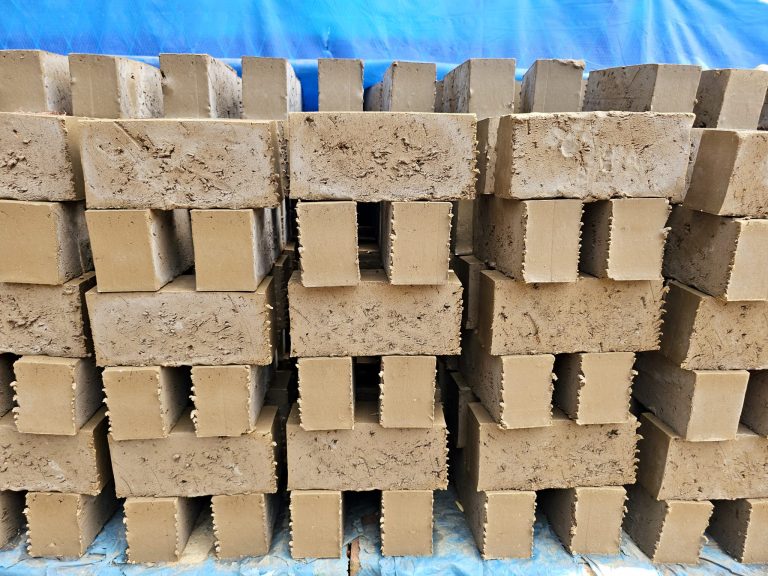
Trade restrictions and sanctions disrupt supply. Designs that use locally available materials, fewer and more standard components, and parts that can be repaired or substituted are less exposed. A map of where each key material and component comes from shows where the risk lies.
Extreme weather
Heat, floods and storms are the most likely environmental shocks. Resilient design includes passive cooling, flood-resistant detailing, robust materials and maintenance plans, as discussed in the COP30 analysis. The same logic applies to buildings, as the piece on the EU 2040 target shows.
Polarisation and misinformation
Where trust is low, vague claims are risky. Clear evidence, plain language and open data protect the client and the project. Keep an evidence file for every claim made about a design.
Economic downturn and inflation
Tight budgets favour designs with low running costs, low maintenance and long life. Whole-life cost comparisons often show that a more efficient option pays back sooner than expected, especially when energy prices are volatile.
What should a consultant deliver?
- A one-page risk register for the project, linked to design decisions
- A materials and supplier map with alternatives for critical items
- Resilience requirements for heat, water and storms, with numbers
- A whole-life cost comparison for the main options
- An evidence file for every sustainability claim
- A plan for monitoring results after handover
These six items fit into a short report and help a client see sustainability as risk management. The about page explains what this award is about.
What do the headings of a risk-adjusted brief look like?
A good risk-adjusted brief is short. It might run to two pages with the following headings, each answered in plain language and with a number wherever possible.
- Context: where the project is, who uses it and what it must achieve
- Exposures: which of the top risks matter most here, and why
- Requirements: energy, water, materials and waste targets
- Resilience: the heat, flood, storm and supply shocks the project must survive
- Costs: whole-life cost and the main sensitivities, such as energy price
- Evidence: how each claim will be proved and who keeps the records
- Review: when the brief will be revisited and by whom
The value of this format is that it connects a global report to a local decision. A client who sees that a design reduces exposure to a risk that top experts rank first will understand why a slightly higher first cost is sensible. It also gives the consultant a record to return to if conditions change.
How should a consultant handle uncertainty?
Risk reports describe likelihood, not certainty. A sound approach is to test a design against two or three scenarios, for example a supply disruption, a hot summer and a price spike, and to choose options that work reasonably well in all of them. These are often simple, repairable and efficient designs. Avoid options that only work if everything goes right.
Frequently asked questions
What does a sustainable design consultant do?
A sustainable design consultant advises clients and design teams on how to reduce environmental impact and manage risk in design decisions, including materials, energy, water, waste, accessibility and evidence for claims.
What is the top risk in the Global Risks Report 2026?
The report ranks geoeconomic confrontation as the top risk for 2026, up from eighth place the year before. Interstate conflict, extreme weather, societal polarisation and misinformation follow.
How can design reduce supply chain risk?
Designers can use locally available materials, simplify the number of components, favour standard parts and make products repairable, so that a disruption to one supplier does not stop production or force a redesign.